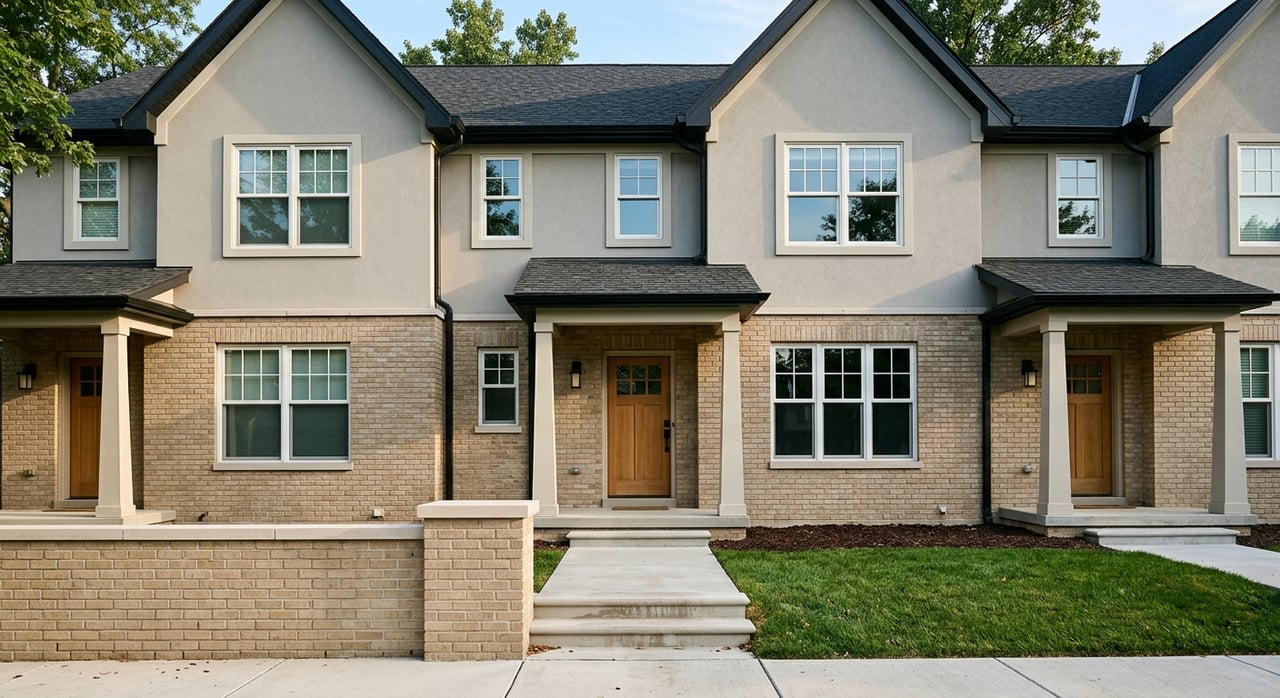
Wondering whether a townhome is the smart middle ground between a detached house and a condo? In Hennepin County, that question comes up often, especially in suburban areas where buyers want homeownership with less exterior upkeep. If you are weighing convenience, monthly dues, resale potential, and day-to-day livability, this guide will help you sort through the trade-offs. Let’s dive in.
Why Townhomes Matter in Hennepin County
In ZIP code 55356, you are looking at the Long Lake post office area within the broader Hennepin County market. That matters because your options are shaped not just by one town, but by the wider Minneapolis and suburban development pattern.
Across Hennepin County, housing values and housing types can vary a lot by city, neighborhood, and property type. A countywide number can be useful for context, but it should never replace a close look at the specific community and townhome development you are considering.
In built-out suburban markets, attached ownership often becomes a more practical option than new detached housing. A recent St. Louis Park housing study found 41 condominium projects with 2,756 units and noted ongoing demand for maintenance-free housing types such as townhomes, twin homes, and villas.
That same study also pointed to a lack of vacant land, which pushes some new for-sale housing toward more compact formats. In plain terms, when land is limited and demand remains strong, townhomes often become a bigger part of the local ownership mix.
Where You Are More Likely to Find Townhomes
In Hennepin County, townhomes tend to show up more often in redevelopment areas, transit-adjacent locations, and established suburbs where land is already heavily used. That does not mean every neighborhood will have the same supply, but it is a useful pattern to keep in mind.
Hennepin County’s Transit Oriented Communities program has supported about 176 projects since 2003. Public investment around light rail and high-frequency bus corridors can make attached housing and infill development more common in those areas.
For you as a buyer, that means some of the strongest townhome opportunities may be in places with easy access to jobs, shopping, and transportation. The exact fit still depends on the location, the community rules, and the condition of the specific property.
What Townhome Ownership Means in Minnesota
Most townhome communities in Minnesota operate as common interest communities, often called CICs. According to the Minnesota Department of Commerce, these communities are generally governed by the Minnesota Common Interest Ownership Act, also known as Chapter 515B.
That legal structure affects more than monthly dues. It shapes how the association handles budgets, assessments, liens, insurance, and shared responsibilities.
Just as important, the declaration and bylaws spell out what you own individually and what the association maintains. They may also cover rules related to rentals, parking, pets, noise, gardens, and exterior decorations.
This is one reason a townhome purchase is never just about floor plan or price. You are also buying into a system of shared ownership, shared costs, and shared expectations.
The Biggest Advantage: Less Exterior Work
For many buyers, the main appeal of a townhome is simple. You may get a more manageable ownership experience than you would with a detached house.
The Minnesota Attorney General notes that common interest community ownership can reduce responsibilities such as snow removal and yard maintenance. If you want to spend less time on outdoor chores, that can be a real quality-of-life benefit.
This type of setup can be a strong fit if you travel often, have a busy work schedule, or simply do not want the full maintenance load of a standalone home. It can also appeal if you want to stay in homeownership while simplifying daily responsibilities.
The Main Trade-Off: Dues and Rules
The convenience of townhome living usually comes with monthly association dues and community rules. That is the trade you need to evaluate clearly.
Some buyers are comfortable paying dues in exchange for maintenance services and a more predictable exterior standard. Others find the rules too restrictive, especially if they want more freedom over parking, pets, rentals, or exterior changes.
Because each community is different, you cannot assume one townhome association works like another. One development may include shared driveways, walkways, garages, or stormwater systems, while another may assign those responsibilities differently.
Why Documents Matter So Much
If you are serious about buying a townhome in Hennepin County, the documents matter almost as much as the unit itself. This is where careful review can help you avoid expensive surprises.
The Minnesota Attorney General says a seller must provide key resale disclosure materials. These include the declaration and amendments, bylaws, articles, rules, the resale disclosure certificate, the most recent financial statement and current budget, plus any outstanding judgments or pending lawsuits against the association.
Those records can tell you whether the association appears well managed, whether reserves seem adequate, and whether there may be future financial pressure on owners. They also help clarify what you are truly responsible for once you move in.
From a risk standpoint, this is one of the most important parts of the process. A technically informed review can help you look past surface finishes and focus on the bigger ownership picture.
Is a Townhome More Affordable?
Sometimes, yes, but affordability is not just about the purchase price. In local housing research, maintenance-free ownership has appealed to buyers who find attached housing more attainable than new single-family construction.
That said, lower entry pricing does not automatically mean lower overall cost. You also need to factor in association dues and understand what those dues actually cover.
A townhome can be financially attractive when the trade-off matches your lifestyle. If you value convenience and reduced exterior work, the monthly dues may feel worthwhile. If you prefer maximum control and fewer shared decisions, the numbers may look different to you.
How Townhomes Fit Different Life Stages
Townhomes often work well for buyers who want simpler ownership without leaving the market. Local housing research in St. Louis Park points to strong interest from empty nesters, retirees, professionals, and some younger households.
Many newer maintenance-free homes are also designed with easier long-term living in mind. Some include one-level living or a main-level owner’s suite, which can be useful if you want to reduce stairs while keeping the benefits of ownership.
That does not mean a townhome is only for one type of buyer. It simply means the format can serve several needs well, especially when low-maintenance living is a top priority.
What About Resale Value?
Townhomes have shown solid value movement in Hennepin County, but the story is highly local. Hennepin County’s 2026 assessment reported that the residential townhome segment increased 5.8% gross and 4.5% net of new construction, while residential values countywide increased 2.7% overall.
That is useful market context, but it is not a blanket promise for every community. Hennepin County also stresses that each city, neighborhood, and property type has its own story.
In practical terms, resale potential often comes down to location, condition, association health, and buyer demand for that specific product type. A townhome near transit access, job centers, or reinvestment corridors may have stronger long-term appeal than a similar property in a less connected location, but that is still case by case.
Questions to Ask Before You Buy
Before you decide that a townhome is the right fit, it helps to slow down and ask a few direct questions:
- Do you want less exterior maintenance enough to accept association dues?
- Are you comfortable with community rules on parking, pets, rentals, or exterior changes?
- Have you reviewed the budget, financial statement, and resale disclosure materials carefully?
- Do you understand what the association maintains versus what you maintain?
- Does the location support your routine, commute, and long-term plans?
If you can answer those confidently, you are much closer to knowing whether the lifestyle makes sense for you.
So, Is a Townhome the Right Fit?
A townhome can be an excellent fit in Hennepin County if you want homeownership with less day-to-day exterior work and you are comfortable with shared rules and shared costs. In many suburban and redevelopment areas, it is an increasingly practical way to buy into the market.
The key is to look beyond the listing photos. You want to understand the building type, the governing documents, the association’s financial health, and how the location fits your life.
That is where experienced guidance matters. With a strong local read on Twin Cities housing patterns and a construction-minded eye for risk, Curt Adams LLC can help you evaluate whether a townhome is a smart fit for your goals.
FAQs
What does townhome ownership usually include in Hennepin County?
- In many Minnesota townhome communities, you own your unit while sharing certain responsibilities through a common interest community, which may include association-managed items like snow removal, lawn care, or shared exterior elements.
What documents should you review before buying a Minnesota townhome?
- You should review the declaration, bylaws, rules, resale disclosure certificate, current budget, most recent financial statement, and any outstanding judgments or pending lawsuits involving the association.
Are townhomes in Hennepin County a good option for low-maintenance living?
- They often are, especially if you want less exterior upkeep than a detached house and are comfortable with monthly dues and association rules.
Do all Hennepin County townhome communities work the same way?
- No. Maintenance responsibilities, restrictions, shared features, and association rules can vary widely from one development to another.
Have townhome values increased in Hennepin County?
- Hennepin County’s 2026 assessment reported growth in the residential townhome segment, but value trends still depend heavily on the specific city, neighborhood, and property.
Where are townhomes more common in the Hennepin County market?
- They are often more common in established suburbs, redevelopment areas, and locations near transit corridors where higher-density housing is more practical than detached-home expansion.